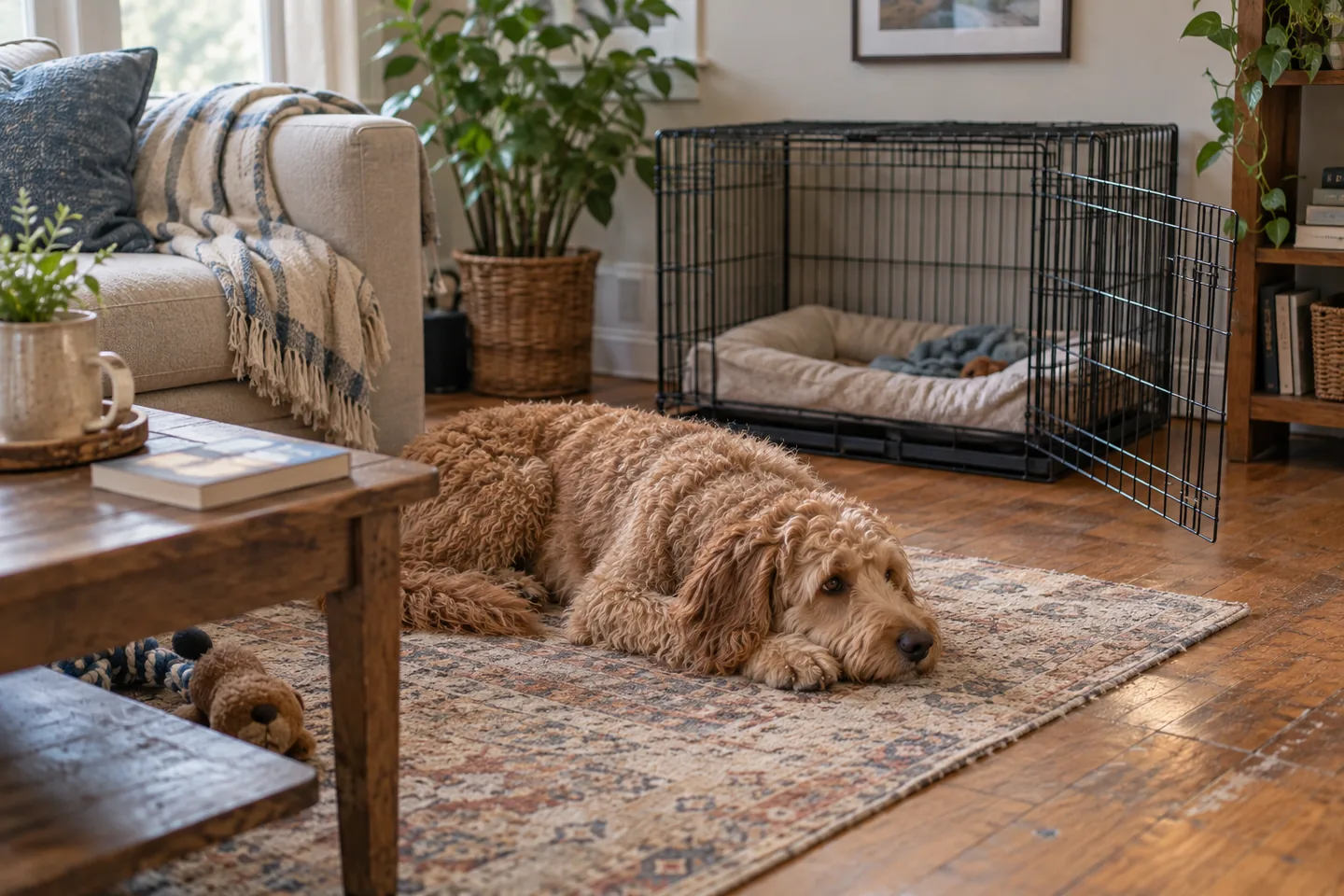
Measure the crate, its moving parts, and the room
Keep animal fit separate
Use the exact model's manufacturer instructions and qualified advice where needed to decide animal fit. This guide compares floor space; it doesn't select a crate by breed or weight, predict adult size, or prescribe divider use. Don't solve a tight room by choosing an unsuitable internal size.
Get the assembled exterior
Record length, width, and height, including feet, handles, latches, and projecting hardware. A “36-inch” label is only a starting point. Interior measurements and shipping-box dimensions won't tell you how much space the assembled crate occupies. Check accessories against the exact model, not just the brand.
Check what opens and comes out
Note which side has a door, how far it projects when fully open, and where you need to stand to reach the latch. Check tray-removal distance and any overhead space needed to lift parts. Two crates with similar closed dimensions may work very differently beside a sofa or cabinet.
Measure the actual spot
Measure between finished surfaces, including baseboards and projecting furniture or fixtures. Add nearby door swings and drawer extensions to your sketch. Check the route with the crate open and someone using it, not only with the room empty. Allow for any placement requirements in the manufacturer's instructions.
MidWest iCrate 30-inch double-door dog crate
Compare the 30-inch double-door iCrate if door position and storage between uses matter. The linked listing is model 1530DD; check the exact assembled exterior against your room before ordering.
Leave room to operate both doors and remove the pan. The guide's five footprints are illustrations, not measured iCrate models. Choose animal fit separately using the exact manufacturer's instructions.
Compare five footprints in one room
Each example uses a 120 × 108 in room. Compare exterior footprints of 24 × 18, 30 × 20, 36 × 24, 42 × 28, and 48 × 30 in. These are illustrative dimensions, not verified product models or animal-size recommendations.
The opening is on the right, with an example 18 in deep area reserved beside it. That area is not a measured door swing or a promise of enough access. A separate 36 in wide strip stays empty in each drawing; it is an example dimension, not a minimum clearance, accessibility standard, or code-compliance claim. Replace both with the space your actual product and household need.
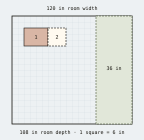
24 × 18 in example
Long edge parallel to the upper wall; opening on the right.
- Crate exterior: 24 × 18 in
- Illustrative door-access reserve: 18 × 18 in
Unoccupied floor width: 36 in. An example measurement, not a clearance standard.
The 18 in access reserve is an illustration, not a universal door size. Replace it with the actual open-door envelope and room needed to operate the latch.
Keep these measurements beside the listing
In the largest example, the opening-space reserve ends 78 in from the left wall. The separate empty strip begins at 84 in, leaving a 6 in gap between them. That gap is not extra access verified for a product. Actual doors and irregular furniture need their own outlines; subtracting one rectangular footprint won't capture every obstruction.
Choose the location before the finish
Compare door positions before choosing a color or furniture-style surround. A side opening may suit one spot better than an end opening, but only if the selected model has it. Check cleaning access too: a tray that slides out easily in a listing photo may run straight into your coffee table at home.
If a position requires moving furniture whenever you open the door or remove the tray, try another location. Recheck the measurements whenever the model or arrangement changes. Once animal fit and use are decided separately, the better room setup is the one you can operate without rearranging it every day.